



An emotional support animal can be more than just a pet. It can be a lifeline for people navigating anxiety, depression, and other mental health challenges. For many residents, the bond with an animal brings a sense of calm, stability, and daily comfort that traditional treatments alone may not fully provide. But what exactly qualifies an animal as an emotional support animal, and what rights do you actually have?
With growing awareness and a lot of misinformation, understanding how ESAs work, who qualifies, and what the law actually says has never been more important. This guide breaks it all down clearly and practically so you can make informed decisions for yourself or a loved one.
What Is an Emotional Support Animal?
An Emotional Support Animal (ESA) is a companion animal that helps people with mental or emotional health problems feel better and more stable. ESAs don't need special training like service animals. Their main job is simple but important: to provide companionship that helps reduce the symptoms of anxiety, depression, PTSD, panic disorders, and other similar conditions.
Emotional support animals are recognized under federal housing laws, which means qualified individuals may legally keep their ESA even in many properties that normally restrict pets.
In the United States, ESAs are recognized under federal housing laws, not state-specific statutes. This means your rights are protected, but only in certain situations (mainly housing).
“The unconditional love and non-judgmental presence of an emotional support animal can create a safe space for healing and emotional growth.” – Dr. Robert Staaf
Types of Emotional Support Animals and Their Benefits
 Dogs
The most common ESAs, dogs provide loyalty, companionship, and emotional security. They help with anxiety, depression, loneliness, and panic attacks, and they also encourage people to stick to a routine and be active.
 Cats
Cats are ideal for people who prefer a calm and low-maintenance companion. Their affectionate nature helps reduce stress, loneliness, and emotional anxiety, especially in apartment living.
 Rabbits
Quiet and gentle, rabbits are great for smaller spaces. They help create a peaceful environment and provide comfort for people dealing with stress or social anxiety.
 Birds
Birds offer emotional connection through interaction and playful behavior. They help lift your mood, make you feel less alone, and bring good things into your life every day.
 Small Animals
Hamsters, guinea pigs, and similar pets can also be ESAs. They are easy to manage and help create emotional stability through companionship and routine.

The bond between humans and emotional support animals provides powerful therapeutic benefits
How Emotional Support Animals Help Mental Health?
Studies and mental health professionals increasingly recognize the emotional benefits animals can provide to people facing psychological challenges. Many people find that having an emotional support animal makes them feel more at ease, secure, and capable of handling everyday stressors. For some people, an ESA becomes an important part of maintaining emotional stability and improving overall quality of life.
You may qualify for an ESA if you are diagnosed with a mental or emotional health condition that significantly impacts your daily life. Some common qualifying conditions include (but are not limited to):
- Anxiety disorders
- Depression
- PTSD
- Chronic stress
- Panic disorders
- Phobias
To officially have an ESA, you need an ESA letter from a licensed mental health professional (LMHP), such as a therapist, psychologist, or psychiatrist.
Emotional Support Animal Laws: What You Need to Know?
When someone types in “ESA laws US” or “emotional support animal rights,” they are usually referring to the federal housing protections and accommodation rules that apply to emotional support animals under the Fair Housing Act.
Since ESA regulations can vary depending on housing situations and documentation requirements, understanding the latest ESA laws is important for both tenants and property owners.
 Fair Housing Act (FHA)
The Fair Housing Act is the primary law that protects ESA owners in the United States. Under this law:
- Landlords must make reasonable accommodations for tenants with ESAs
- ESAs are allowed even in “no-pet” housing
- Pet fees and deposits cannot be charged for ESAs
This is why many renters search: “Can a landlord deny ESA?” But the answer is, in most cases, no. If you have a valid ESA letter.
When Can a Landlord Deny an ESA?
While ESA protections are strong, there are exceptions. A landlord can legally deny your ESA if:
- You don’t have a valid ESA letter
- The animal poses a direct threat to others
- The animal causes significant property damage
- The housing is exempt from FHA rules (e.g., small owner-occupied buildings)
So while ESAs offer protection, documentation is key.
ESA vs. Service Animals: What’s the Difference?
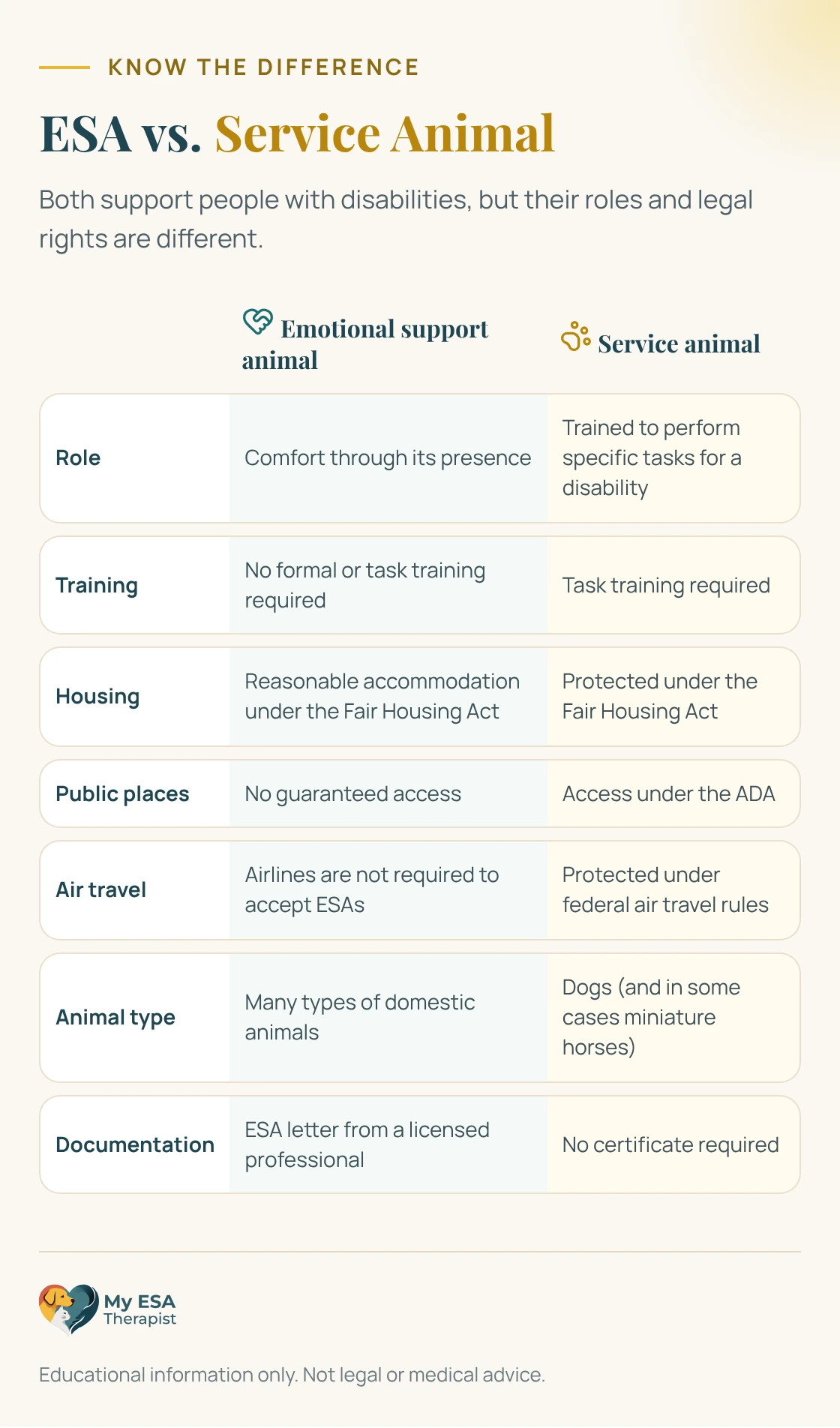
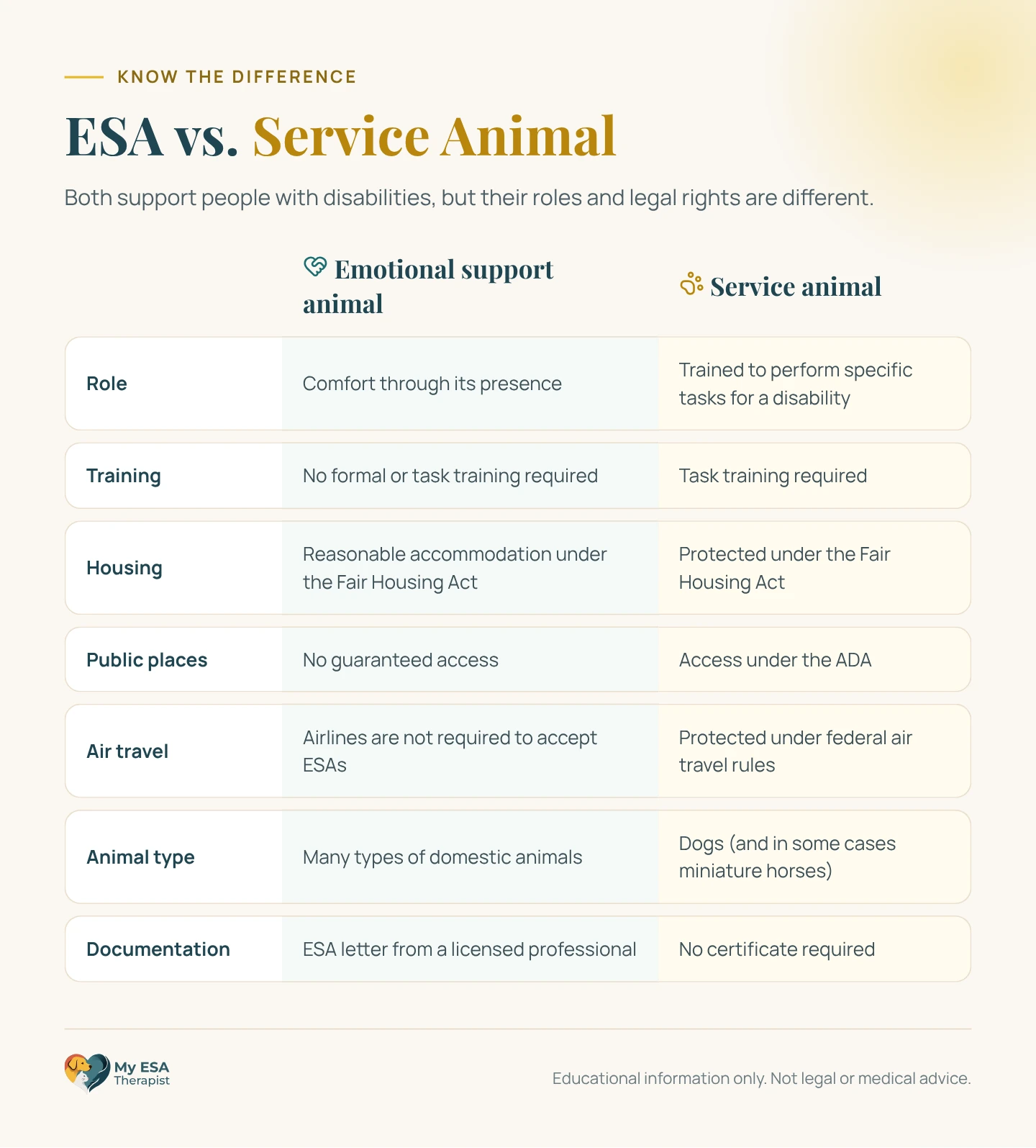
Emotional support animals (ESAs) and service animals serve different roles, even though both support individuals with mental health or physical conditions. ESAs provide comfort simply through their presence and don’t require formal training, but their legal rights are mostly limited to housing.
Service animals, however, are professionally trained to perform specific tasks and are granted broader legal access, including public places and air travel under federal law.
Can Emotional Support Animals Go Anywhere?
No. Emotional support animals do not automatically receive public access rights under federal law. Unlike service dogs, ESAs are generally not permitted in all public places simply because they provide emotional support.
Businesses and establishments may still allow ESAs voluntarily, but federal law does not require public access accommodations for emotional support animals.
Places where ESAs are not automatically guaranteed access include:
- Restaurants
- Grocery stores
- Shopping malls
- Hotels
- Public transportation
- Workplaces
Emotional Support Animals Housing Rules
Understanding “ESA housing rules” can save you from unnecessary stress, especially if you’re renting.
 What Landlords Can Ask:
- A valid ESA letter from a licensed professional
- Confirmation that your need for the ESA is genuine
 What Landlords Cannot Do:
- Ask for detailed medical records
- Charge pet fees or deposits
- Deny housing solely because of your ESA
This is especially helpful for renters worried about pet restrictions.
Emotional Support Animals and Air Travel
Air travel rules for emotional support animals have undergone significant changes in recent years, particularly after 2021. Airlines are no longer federally required to recognize ESAs as service animals under U.S. Department of Transportation regulations.
This means:
- Most airlines now treat ESAs as regular pets
- Airlines may charge pet fees for ESAs
- Airlines can apply standard pet restrictions and carrier rules
Only trained service dogs currently receive mandatory air travel protections under federal law.
How to Get an Emotional Support Animal
If you’re wondering “how to get an emotional support animal,” the process is actually quite simple and accessible for most people:
Step 1: Assess Your Mental Health Needs
First, check your mental health to see if you have any problems like anxiety, depression, or stress that could use some emotional support and company.
Step 2: Speak to a Licensed Professional
Get in touch with a licensed therapist or mental health professional who can properly evaluate your condition and decide if an ESA is a good addition to your treatment plan.
Step 3: Get Your ESA Letter
If you meet the requirements, the professional will write you an ESA letter, which is an official document that proves you need an emotional support animal under housing laws.
Step 4: Provide It to Your Landlord
Even if the property has a “no pets” policy, you can still ask for accommodation by giving your ESA letter to your landlord or housing provider.
It is important to avoid fake ESA certification websites or unofficial registries that promise “instant approvals” without proper mental health evaluations.
Conclusion
Emotional Support Animal therapy represents a valuable complement to traditional mental health treatment approaches. The bond between humans and animals offers unique therapeutic benefits that can significantly improve quality of life for individuals facing mental health challenges.
If you’re considering ESA therapy, we encourage you to consult with a licensed mental health professional to explore whether this option is right for you. At My ESA Therapist, we’re committed to helping you find the support you need for your mental health journey.
Frequently Asked Questions About This ESA Topic
Answers from this article about eligibility, housing, and the evaluation.
01What are the rules of having an emotional support animal?
02Can a roommate refuse to live with an emotional support animal?
03Are exotic animals allowed as emotional support animals?
04What happens if a landlord ignores an ESA accommodation request?
05Are emotional support animals only for severe mental health conditions?
06Why do emotional support animals improve mental well-being?

Allyson Valley
Allyson Valley, Ph.D., LPC, is a mental health writer, researcher, and licensed professional counselor with more than 11 years of experience in emotional wellness, counseling support, and crisis management.
See full bioYour Next Step
ESA documentation is issued only after an evaluation by a licensed professional. These pages explain the process and requirements.



- Evaluation by a clinician licensed in your state
- $99, no hidden fees
- Secure, HIPAA-compliant telehealth