



No. ESA training is not a legal requirement. However, basic obedience can make an emotional support animal safer, calmer, and easier to manage in everyday situations. Commands like sit, stay, come, down, leave it, quiet, place and heel can make daily interactions more predictable and help owners handle their ESAs with greater confidence.
An ESA can do something no pill or therapy session fully covers: it sits with you, literally, when anxiety or panic hits. There's no rule saying your ESA has to complete task training the way a service animal does; but skipping training altogether isn't really doing your animal any favors either.
An ESA that knows a few basic commands is easier to have around, easier to take places, and honestly more useful in the moments where you are in distress. These recommended eight commands cover what matters the most.
“A well-trained emotional support animal can be easier to manage during stressful moments, giving owners greater confidence and helping create a calmer environment when they need support most.” – Gaurav Patel, MD
What Commands Should an ESA Know?
Teaching an ESA basic commands can make day-to-day routines safer and easier to manage.
These 8 commands can help your emotional support animal respond to you at home, outdoors, or in front of your guests.
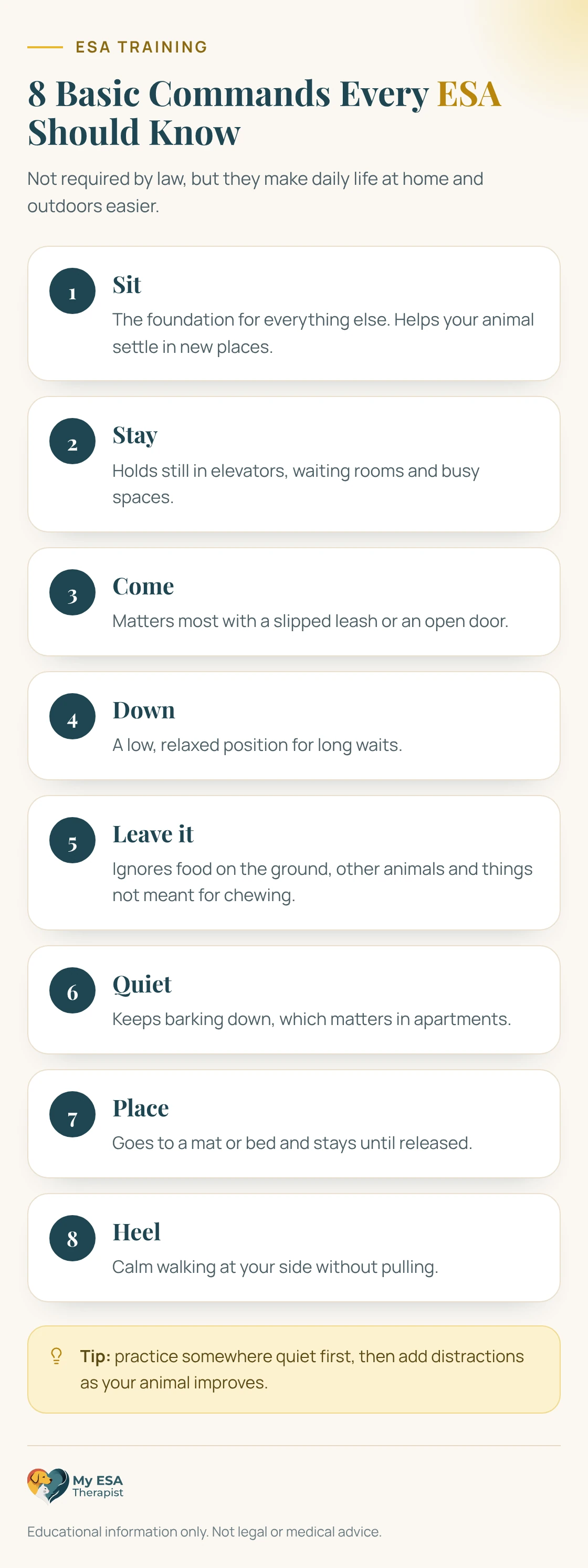
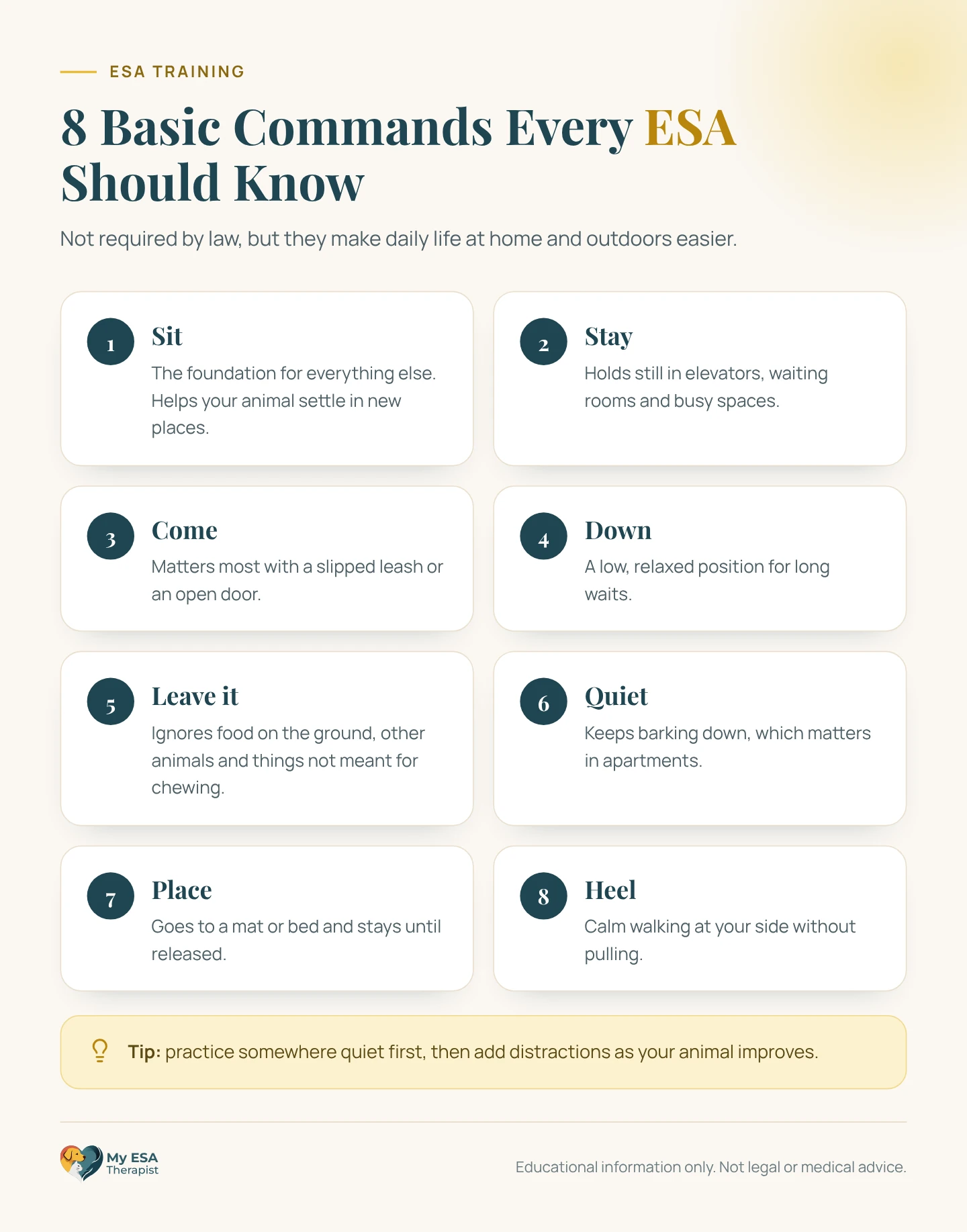
1. Sit
Everything else kind of branches off this one. Handy for guests at the door, waiting rooms, or just getting your animal to settle into a new place. Most pick it up within a few sessions if you've got treats on hand.
2. Stay
Builds on sit by adding further self-control. Think elevators, waiting rooms, anywhere crowded with people where your animal needs to hold still instead of wandering off. Start with having the ESA stay for a few seconds, then stretch it out over time.
3. Come
This is the one that strongly matters in an emergency, or even with a slipped leash or a door left open. Practice it somewhere quiet first before trying it out in a busier spot with more distractions.
4. Down
Puts your animal into a low and relaxed posture for longer stretches or during a long wait somewhere. It also doubles as a signal to calm down if they're picking up on your distress.
5. Leave It
Teaches your ESA to ignore whatever it shouldn't be near, such as food on the sidewalk, another animal, or something not meant for chewing. This command keeps them out of trouble and keeps you from having to stress about keeping certain things away from them.
6. Quiet
If barking is an issue, then this one is non-negotiable, especially in an apartment. It makes life with neighbors and landlords a lot smoother, particularly when you're leaning on Fair Housing Act protections to keep your ESA at home.
7. Place (or Settle)
Sends your animal to a specific spot, a mat or bed, and keeps them there until you say otherwise. Good for when guests come over, during meals, or whenever you just want them nearby without being underfoot. This may be especially helpful for individuals with fall risk.
8. Heel
No pulling, no lunging at every person or dog you pass; just calm, focused walking. This alone makes most outings less stressful, and may be helpful for those with poor reflexes or upper body strength.
Why Training Matters For An ESA?
An ESA helps just by being present, but that only works if the animal itself is calm. A dog that drags you down the street or won't stop barking adds stress instead of relieving it. Training builds the kind of communication that makes the ESA bond actually work.
There's a practical angle too; ESAs don't carry the same public access rights service animals do, but plenty of housing situations, a few airlines, and most therapy offices still expect an animal that behaves. Trained animals are just easier to bring along.
How to Train Your ESA Effectively?
Short sessions work better than long ones, five or ten minutes is plenty. Stick to treats and praise rather than punishment as correction. Don't just train at home either, an animal that listens in your living room might ignore you completely in a parking lot. Give it time. Some animals pick things up fast, some don't, and stress can slow the process down further.
If it feels like too much to train your ESA on your own, then a certified trainer or behaviorist can put together a plan built around your animal specifically.
So, What Makes a Well-Trained ESA?
A well-trained ESA should be calm, responsive, and manageable in everyday situations. It should reliably follow basic commands such as sit, stay, come, down, leave it, quiet, place, and heel, especially around guests, other animals, and unfamiliar environments. These 8 basic commands make daily life with an ESA noticeably easier at home, out running errands, or dealing with housing situations.
Once your ESA can adhere to these basic commands, it is important to note that you should have a valid document stating that your pet is an emotional support animal. Here is where legitimate ESA letter providers come into play. My ESA Therapist connects you with licensed mental health professionals for a secure, online mental health evaluation so that you can stay with your emotional support animal in your rental housing without any hassles.
Frequently Asked Questions About This ESA Topic
Answers from this article about eligibility, housing, and the evaluation.
01Does an ESA need to be trained like a service animal?
02How long should I train my ESA each day?
03What are the most important commands for an ESA?
04Should I hire a professional to train my ESA?
05Can training make an ESA more helpful during stressful situations?

Allyson Valley
I’m a Licensed Professional Counselor (LPC-MHSP), Ph.D. in Counselor Education & Supervision, with over six years of experience leading and delivering care across crisis services, behavioral health programs, and healthcare systems.
See full bioYour Next Step
ESA documentation is issued only after an evaluation by a licensed professional. These pages explain the process and requirements.



- Evaluation by a clinician licensed in your state
- $99, no hidden fees
- Secure, HIPAA-compliant telehealth