



Yes. Post-traumatic stress disorder (PTSD) is a recognized mental health condition and may qualify you for an ESA if it significantly affects your daily life. A licensed mental health professional must evaluate your condition and determine whether an emotional support animal could provide meaningful therapeutic support.
Living with PTSD not only affects your mental health but also interferes with daily life and causes trouble sleeping, concentrating, and in social situations. For some people, having an emotional support animal around can help reduce these negative thoughts and promote a sense of well-being and comfort in their daily lives.
But just having PTSD alone does not make an individual eligible for an ESA or an ESA letter. What matters is how the condition affects your daily life and whether the support animal provides meaningful support in your circumstances.
A licensed mental health professional must make the decision through an independent, clinical assessment. Understanding this process can help you know what to expect before requesting an ESA letter.

What Is PTSD and How Can It Affect Daily Life?
Post-traumatic stress disorder (PTSD) can develop after experiencing or witnessing a traumatic event. It can affect how a person reacts to stress, processes memories, and responds to everyday life situations. Symptoms may include disturbing memories or flashbacks, nightmares, anxiety, avoidance, difficulty concentrating, sleep problems, emotional numbness, and feeling constantly on alert.
PTSD can make everyday things feel harder. Some people avoid certain places or situations, struggle to concentrate, or have a hard time feeling safe and relaxed. For others, symptoms may come and go depending on what triggers them. Since PTSD can affect everybody differently, what matters is how your symptoms are affecting your daily life and whether an ESA may be appropriate or not.
“For some individuals with PTSD, the steady presence of an emotional support animal can offer comfort, reassurance, and a greater sense of emotional stability throughout the day.” – Leslie K. Gamble, Licensed Independent Clinical Social Worker
Does PTSD Qualify You for an ESA Letter?
Usually, yes. If your PTSD is limiting how you function day to day, and if a licensed professional agrees an ESA would help manage your symptoms.
PTSD looks different depending on the person, but it stems from trauma and tends to involve some combination of dissociation, flashbacks, anxiety responses, sleep problems, bad dreams/nightmares, emotional shutdown, avoidance, difficulties in relationships, and not feeling safe.
A diagnosis by itself doesn’t automatically make you eligible for an ESA, though. Someone still has to look at how PTSD is playing out in your life and decide if an ESA actually makes sense for you and your life circumstances.
How to Get an ESA Letter for PTSD?
An ESA letter for PTSD is what makes everything official. It comes from a licensed mental health professional and states that you have a qualifying condition and that an ESA would help manage it. The ESA letter must be personalized to you, your symptoms, and your daily routines.
In practice, that means completing an assessment with a licensed mental health professional first. This will involve the healthcare professional actually asking about your symptoms and how PTSD affects your daily life. If they think an ESA would benefit you, they write the recommendations in a formal letter on official letterhead. The letter itself should include their license details and a clear statement that you have a qualifying condition for an ESA.
Online ESA letters are legitimate, as long as a real evaluation happens with a licensed provider. If a website is handing out approvals with no assessment at all, skip it; that letter won't hold up when you actually need it.
What an ESA for PTSD Actually Helps With?
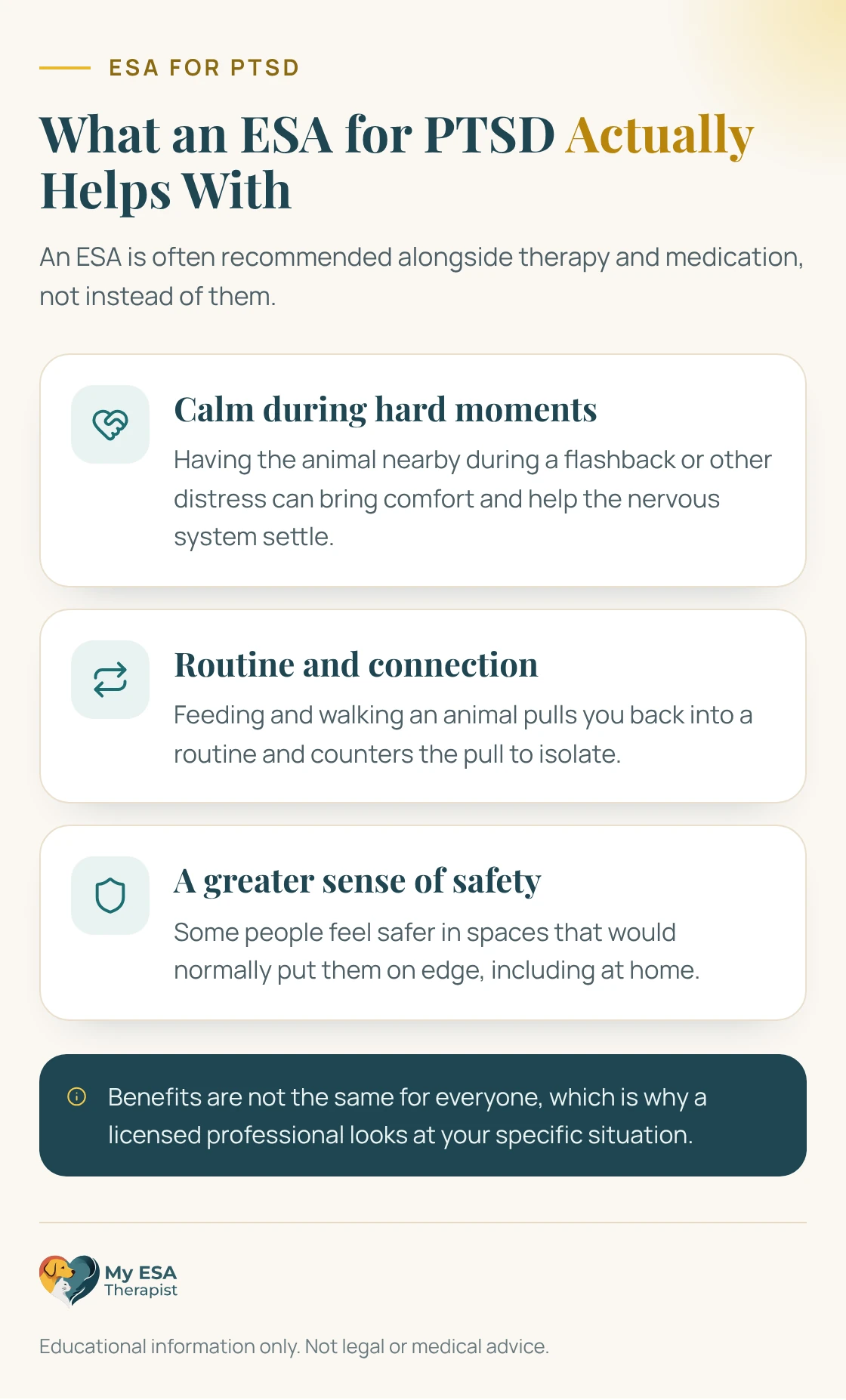
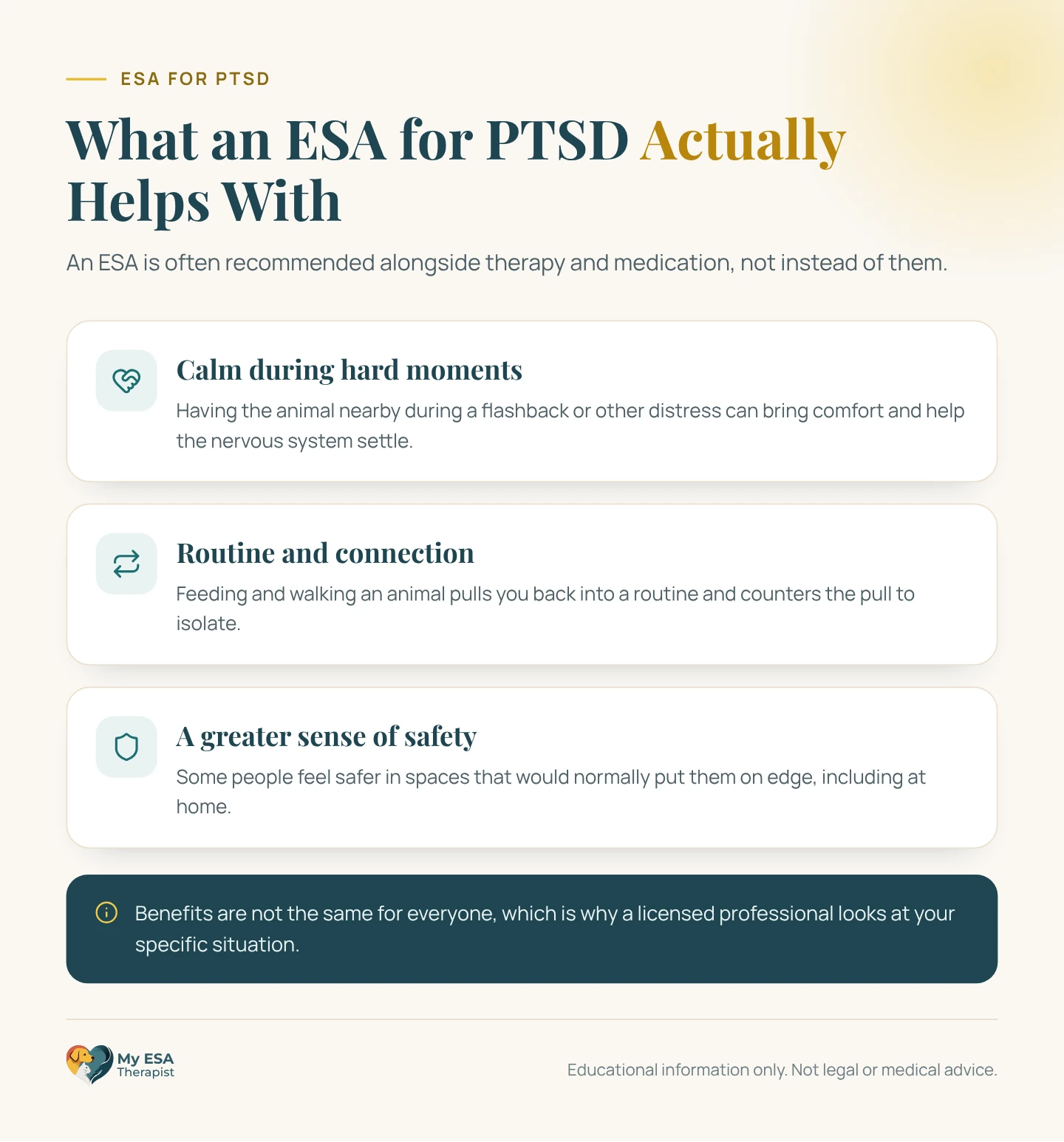
An ESA is not going to replace therapy or medication and is often recommended in addition to mental health therapy and medication management. However, people managing PTSD often notice several ESA benefits:
- It's calmer having the animal around during a bad moment, such as a flashback, dissociative episode, or other distress behavior. An animal can provide emotional comfort as well as nervous system co-regulation, or attunement, coaxing the individual’s nervous system back to a safe and secure state.
- PTSD can also push people to isolate, and having another living being that needs you– feeding it, walking it, pulls you back into a routine you might otherwise skip entirely due to depressive symptoms or avoidance.
- Some people feel safer in spaces that would normally put them on edge, simply because the animal's there. For those who have experienced trauma at home, an ESA can provide a stronger sense of safety especially, and provide the support needed to continue living independently.
The benefits of an ESA for PTSD may not be the same for everyone, and the same is true when considering an ESA for anxiety, which is why a professional looks at your specific case instead of just checking a box to complete your letter.
ESA Housing Rights for People With PTSD
If PTSD significantly limits your daily life, an emotional support animal may qualify as a reasonable accommodation under the Fair Housing Act if supported by a legitimate evaluation conducted by a licensed mental health professional. This may allow you to request accommodation without extra pet charges or deposits.
But it is important to keep in mind that you'll still need a valid letter to support your ESA request. A housing provider may ask for reliable disability-related information when your disability or need for the animal is not obvious. Online certifications, instant approval, sticker decals, or animal harnesses are not enough to support a true ESA request with a landlord.
Can they still say no, even with a formal assessment and letter? Sometimes. Not because of your PTSD or because the animal isn't a "normal" pet, that's not allowed, but if the documentation isn't solid, if the animal is genuinely a safety risk, or if accommodating it would create a real burden, then denial is possible. It comes down to the specifics of each individual case.
Things People Usually Ask While Getting an ESA Letter for PTSD.
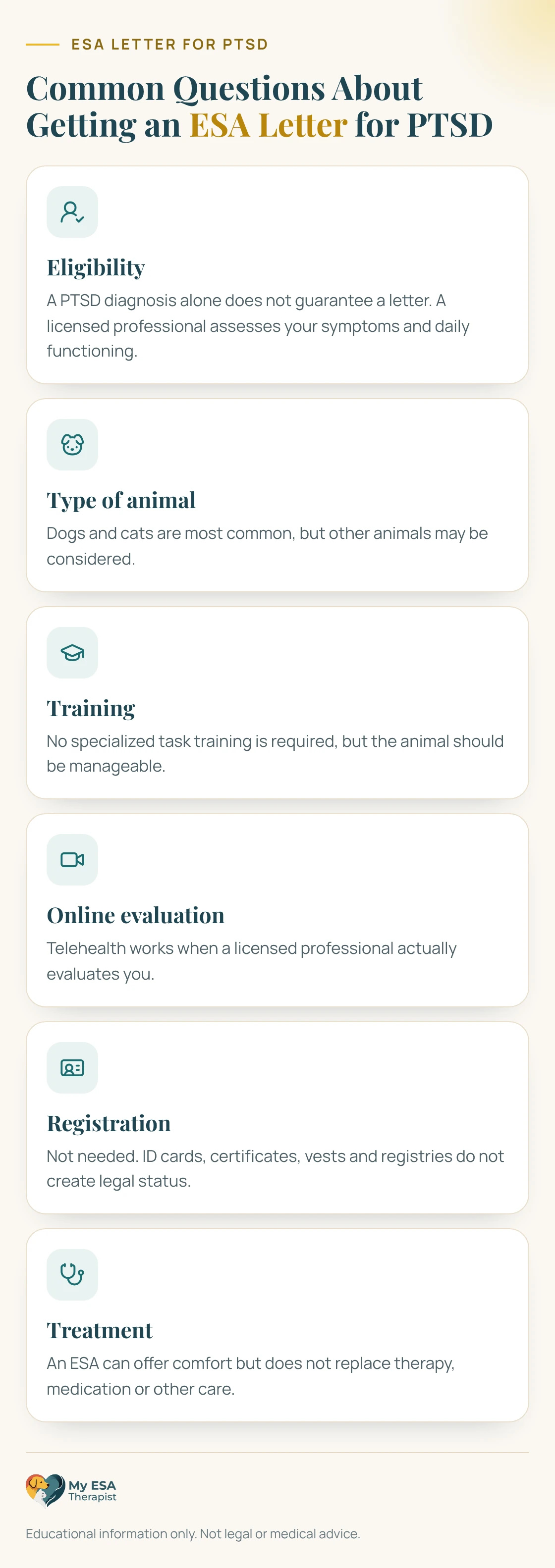
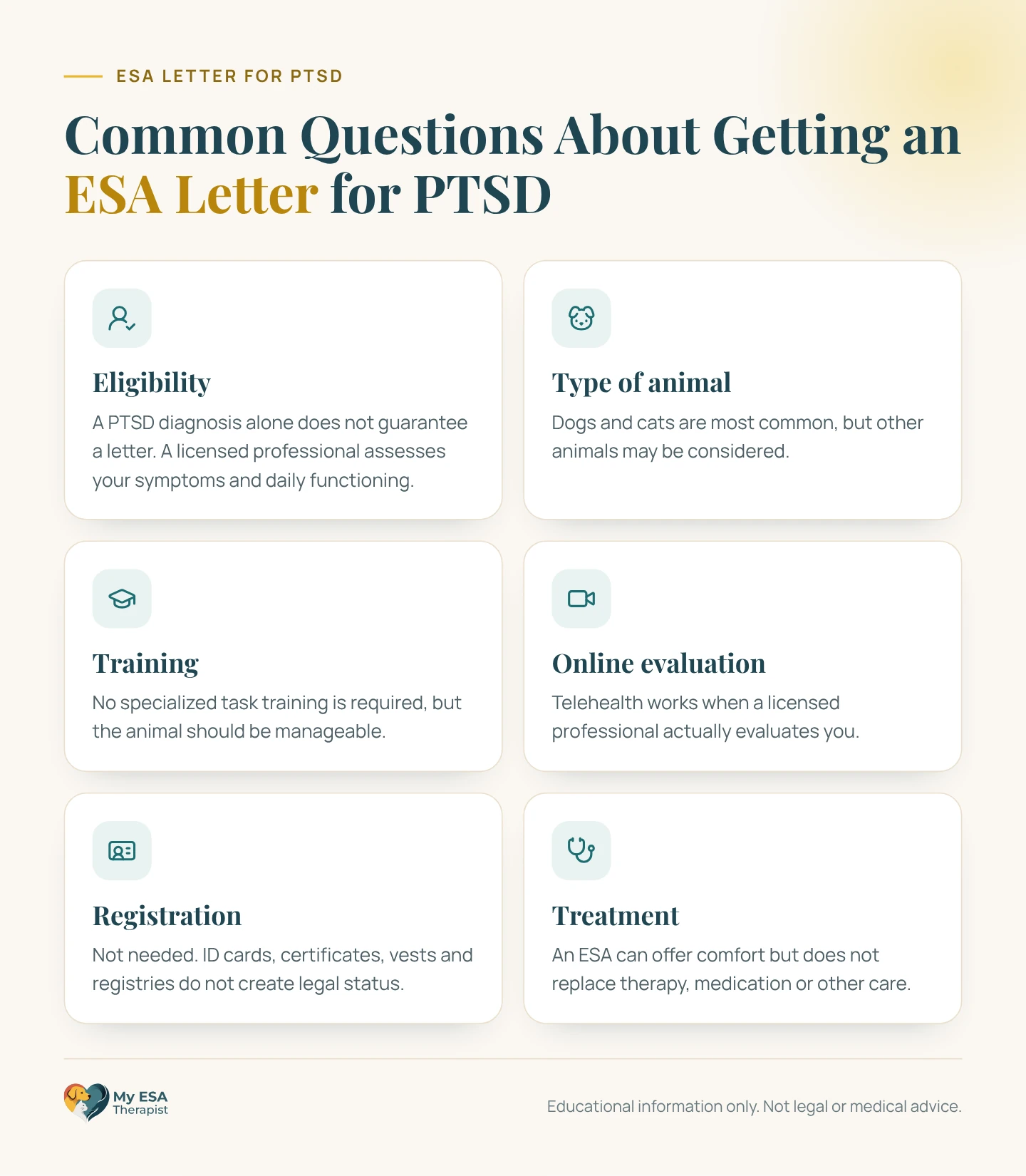
People usually have doubts about the eligibility criteria, animal types, training requirements, evaluation process, registration, and others when they choose to get an ESA letter for PTSD. Let us discuss each in detail:
- Eligibility: A PTSD diagnosis alone does not guarantee an ESA letter. A licensed mental health professional must assess your symptoms, daily functioning, and whether an ESA could provide meaningful support.
- Type of animal: Dogs and cats are the most common ESAs, but other animals may be considered depending on your individual needs and housing situation.
- Training: ESAs do not need the specialized task training required for service animals. However, they should be manageable and appropriately cared for.
- Online evaluation: An ESA letter can be obtained through telehealth when a properly licensed mental health professional actually evaluates you rather than simply approving a form.
- Registration: You do not need to register or certify an ESA through an online database. An ESA ID card, certificate, vest, or online registration does not create legal status.
- Treatment: An ESA can provide comfort and emotional support, but it does not replace PTSD treatment, therapy, medication, or other care recommended by a professional.
If you're considering getting the emotional support animal letter, the real work is in finding a licensed professional who'll take the evaluation seriously. Everything else; the housing protections, the legitimacy of the letter, and the overall ability to seamlessly get your ESA accepted depends on that first step being done right.
Conclusion
PTSD doesn't just show up in scary moments. It shapes daily life in ways that are harder to see. For a lot of people, having an emotional support animal around, just being there, ends up becoming a real part of how they cope.
That said, an ESA isn't a substitute for therapy, medication, or other treatment you're getting from a professional. Whether someone qualifies for one comes down to their specific situation and whether a mental health provider determines it's actually needed as part of their care.
So if you think an ESA might help you deal with PTSD, start by talking to a licensed mental health professional. They can evaluate whether it makes sense for you, and if it does, give you the documentation you'd need for housing accommodations.
Frequently Asked Questions About This ESA Topic
Answers from this article about eligibility, housing, and the evaluation.
01Can an ESA help someone with PTSD live independently?
02Can an ESA help with PTSD-related panic attacks?
03Can a child with PTSD have an emotional support animal?
04Can PTSD caused by a past relationship qualify for an ESA?
05Does my ESA for PTSD need to be a certain age?

Allyson Valley
Allyson Valley, Ph.D., LPC, is a mental health writer, researcher, and licensed professional counselor with more than 11 years of experience in emotional wellness, counseling support, and crisis management.
See full bioYour Next Step
ESA documentation is issued only after an evaluation by a licensed professional. These pages explain the process and requirements.



- Evaluation by a clinician licensed in your state
- $99, no hidden fees
- Secure, HIPAA-compliant telehealth