



Yes. Anxiety disorders are recognized in the DSM-5-TR as a mental health condition and may qualify you for an ESA if they significantly affect your daily life. A licensed mental health professional must evaluate your condition and determine whether an ESA can provide meaningful emotional support.
Everybody experiences anxiety differently. When it comes to having an anxiety disorder, some find themselves in a constant state of fear, leading to difficulty concentrating and feeling detached from daily events, even activities they enjoy. For other people, anxiety might interfere with their daily activities and sleep due to hypervigilance, alarming responses, and physiological arousal. Regardless of how it presents, an anxiety disorder can be debilitating, making it incredibly difficult to participate in and enjoy life.
Many people with anxiety find great emotional support from animals as part of their mental health care plan. When times are difficult, an emotional support animal (ESA) offers stability and consolation.
An ESA can provide emotional support as well as nervous system regulation and may make mental health treatment more effective when combined with a therapist or medication.
Having anxiety just by itself, though, does not automatically qualify someone for an ESA. Whether the animal offers support linked to a diagnosed mental health need and a professional assessment will help to determine an individual’s qualification for an ESA.

Does an Anxiety Disorder Potentially Make Me Eligible for an ESA?
Yes. Anxiety can be a qualifying condition for an emotional support animal when it substantially affects the daily functioning of an individual.
But it is important to note that a qualified mental health practitioner does not just sign an ESA letter based on a diagnosis alone. They consider whether an ESA may offer significant emotional support and how anxiety affects one's daily life.
During an evaluation, a provider may consider:
- How often anxiety symptoms occur
- Situations that trigger the anxiety response
- Whether anxiety interferes with daily living activities
- Emotional challenges caused by anxiety
- Current coping strategies and treatment history
- How an ESA may support mental well-being, emotion regulation, and physiological arousal
For instance, a person who is experiencing severe anxiety-related distress or panic symptoms may discuss whether an ESA could be a helpful enhancement to their mental health and overall quality of life.
“The consistent companionship of an emotional support animal can be a valuable source of comfort for individuals whose anxiety affects their daily emotional well-being.” – Robert Staaf, Licensed Clinical Social Worker
How Can an ESA Support People With Anxiety?
The link between human beings and animals has been studied for many years, especially when linked to the stress response and emotional wellness.
While an emotional support animal is not a medical treatment, the relationship between an individual and their animal may offer significant emotional benefits for long-term anxiety management.
A Calming Presence During Stressful Moments
For many ESA owners, an animal’s presence provides reassurance during periods of increased anxiety. Petting an animal or sitting beside one can become a calming routine. Some people also teach an animal to lean against them, similar to a weighted blanket. Research on human–animal interaction has explored stress responses, but it does not show that an ESA treats anxiety or activates a specific nerve pathway. See Brooks et al., BMC Psychiatry (2018), https://doi.org/10.1186/s12888-018-1613-2.
Some clinicians describe close contact with a calm animal as emotionally grounding. That is an observation about comfort, not a claim that an animal regulates a person’s nervous system or replaces mental health care.
Encourages Healthy Daily Habits
Anxiety can sometimes make everyday responsibilities feel unmanageable. Animal care creates a structure through regular activities like feeding and keeping routines.
For some people, these small responsibilities can help them feel more connected to their daily lives. Providing support to another living creature can bring personal satisfaction and fulfillment, as well as give greater incentive to leaving the house, socializing with other people, and practicing distress tolerance skills in public.
Provides Consistent Companionship
Anxiety can involve feeling isolated. An ESA may offer companionship during those periods. This article does not claim that an ESA reduces suicide risk or treats a mental health condition. If you are thinking about harming yourself, call or text 988 in the United States.
Supports Emotional Regulation
Some people find that having an animal around helps them to regulate their emotional responses better. The comfort of a familiar animal can create a feeling of safety and stability. An animal can recognize distress in people it’s familiar with and help provide co-regulation as well as a grounding presence for the distressed person.
What Rights Does an ESA Letter Provide?
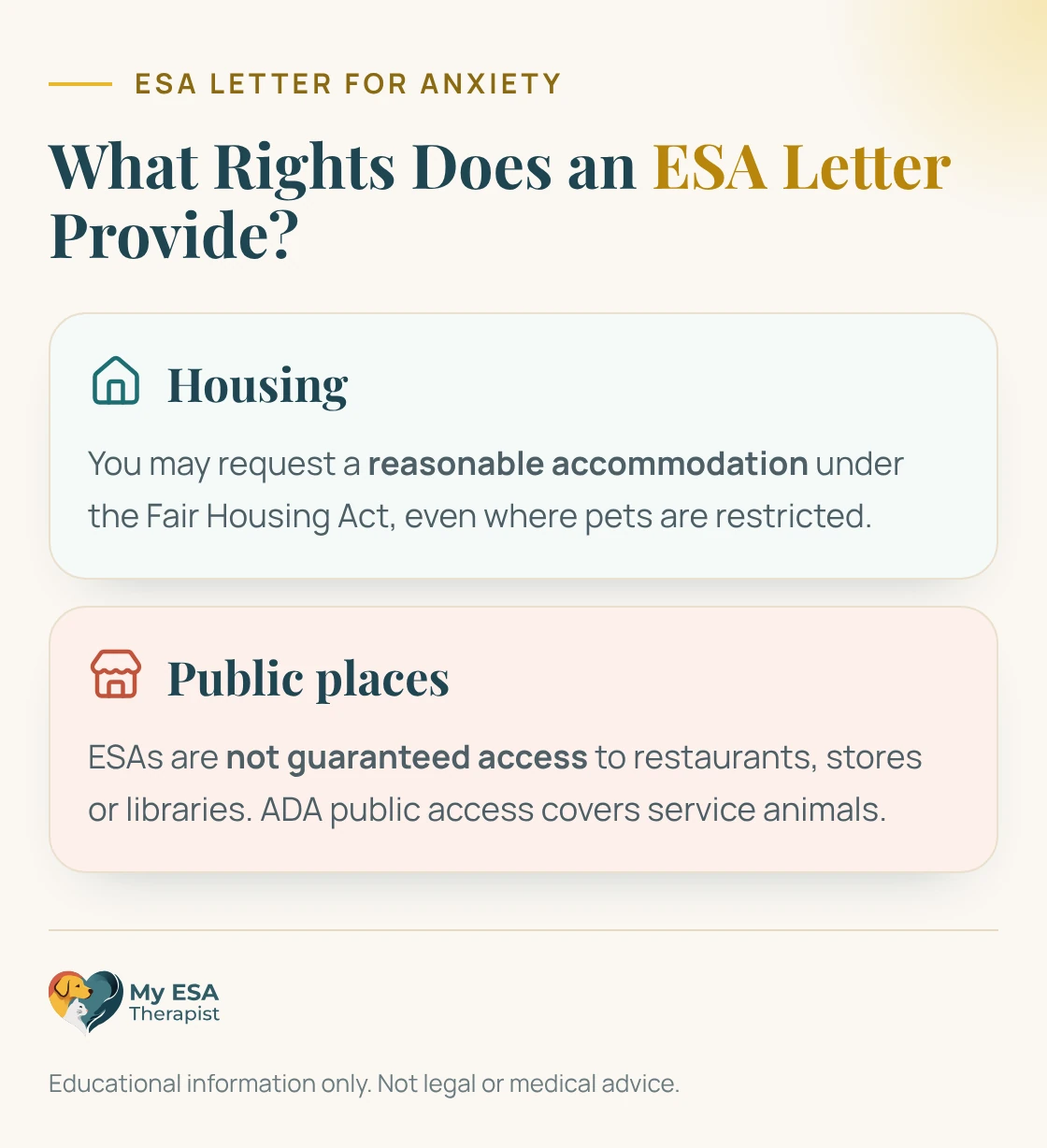
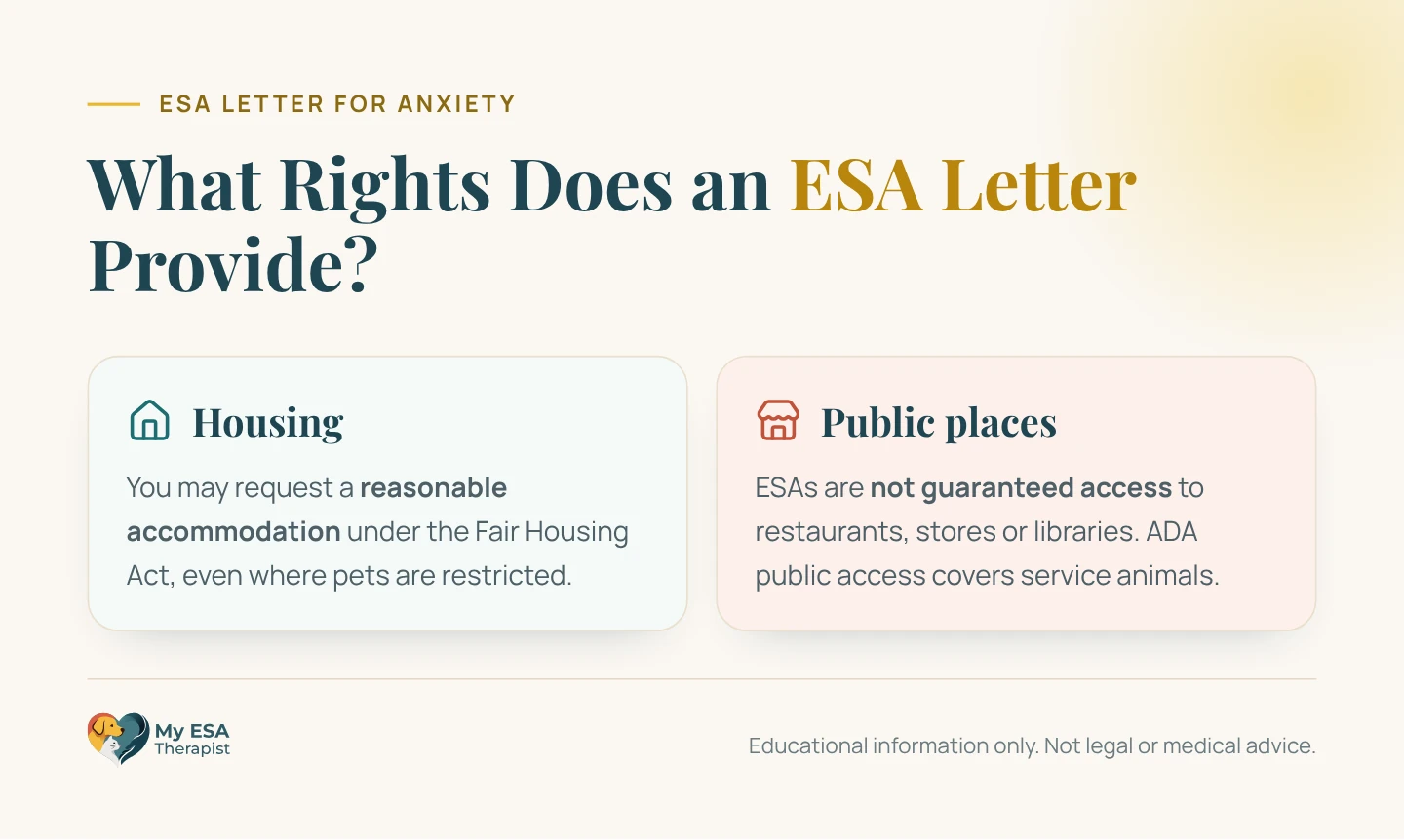
Many people look for ESA paperwork because of issues with their homes. People with qualified impairments may ask for reasonable housing for an emotional support animal under the Fair Housing Act (FHA), even in places with pet restrictions.
An ESA letter for anxiety, though, does not give an animal endless public access privileges. Unlike service animals, ESAs often lack coverage under the Americans with Disabilities Act (ADA) for public access. This means that ESAs do not have guaranteed public access in places such as restaurants, stores, and libraries.
Knowing this difference permits ESA owners to know what safeguards they do and do not have.
Does an Emotional Support Animal for Anxiety Need Training?
No. Unlike service animals, emotional support animals are not mandated to undergo specialized task training. However, an ESA owner may choose to train their animal to respond in specific ways to different distress presentations.
An ESA should behave properly in its surroundings. Daily life for both the owner and the animal can be made simpler with fundamental training, house rules, and socialization. The ESA must not pose a threat to other people or animals.
A well-behaved ESA is more likely to effectively assist its owner while adhering to local and housing requirements.
How to Choose an ESA for Anxiety Support?
Choosing an emotional support animal should not depend on the size, breed, or color of the animal. The right choice depends on the person’s lifestyle, emotional connection, and ability to provide proper care.
Before choosing an ESA, consider the following pointers:
- Whether you can meet the animal’s needs, including financially
- Your living environment, space for the animal, and safety of residents
- The animal’s temperament, age, health conditions, and demeanor
- Your daily schedule, work routines, and physical activity levels
- The type of companionship you find helpful
A strong bond between an individual and their animal is often the basis of meaningful emotional support.

Final Thoughts
An emotional support animal can provide helpful support to people who struggle with anxiety, but it’s not a quick fix or a replacement for mental health care. The purpose of an ESA evaluation is to understand whether an animal can provide genuine emotional support based on an individual’s specific disability needs.
If anxiety is affecting your quality of life, a licensed clinician can help you decide whether an ESA may be appropriate. This article was reviewed by Max Phillips, MSW, LCSW. It is educational and is not medical advice. Related reading: ESA for PTSD, ESA for depression, ESA for ADHD, ESA for bipolar disorder, how to get an ESA letter online, and ESA letter pricing.
Frequently Asked Questions About This ESA Topic
Answers from this article about eligibility, housing, and the evaluation.
01Can I have more than one ESA for anxiety?
02Can children with anxiety qualify for an ESA?
03What happens during an ESA evaluation for anxiety?
04Is an ESA letter recommended for everyone with anxiety?
05How long does an ESA letter for anxiety stay valid?

Allyson Valley
I’m a Licensed Professional Counselor (LPC-MHSP), Ph.D. in Counselor Education & Supervision, with over six years of experience leading and delivering care across crisis services, behavioral health programs, and healthcare systems.
See full bioYour Next Step
ESA documentation is issued only after an evaluation by a licensed professional. These pages explain the process and requirements.



- Evaluation by a clinician licensed in your state
- $99, no hidden fees
- Secure, HIPAA-compliant telehealth