



Yes, you may qualify for an emotional support animal (ESA) letter for bipolar disorder if the condition significantly affects your daily life and an ESA may help ease related symptoms. A licensed mental health professional must evaluate your individual needs and determine whether an ESA is appropriate. A bipolar disorder diagnosis alone does not automatically qualify you for an ESA letter.
No two days with bipolar disorder are the same. Some weeks you are stuck in bed and can’t shake the depression. Other times it flips, mania or hypomania kicks in, and suddenly you’re not sleeping, your energy’s through the roof, and you’re acting like a different person almost. Meds and therapy help with all this, but they don’t cover everything.
This is where emotional support animals can help. The feeling of having an animal for support and companionship puts people with bipolar disorder at ease. If you think an ESA could support your mental health, a licensed mental health professional can evaluate your symptoms, daily challenges, and individual needs.
If they determine that an ESA is appropriate, they may issue an ESA letter for bipolar disorder to document your need for an emotional support animal when requesting housing accommodations under applicable fair housing laws.
What Is Bipolar Disorder?
Bipolar disorder is a mental health condition that shifts a person’s mood, energy, and activity levels far beyond the usual ups and downs. Someone living with it may go through manic or hypomanic episodes, where energy runs unusually high, they feel driven to do more, and they may act on impulse. At other times, they may slide into depression, feeling low, drained, and uninterested in things they normally enjoy. These swings can strain relationships, get in the way of work, disrupt sleep, and take a toll on overall well-being.
Bipolar disorder is lifelong, but it is manageable. With the right treatment, which can include medication, therapy, and healthy daily habits, along with steady support, many people keep their symptoms under control. A qualified mental health professional can evaluate symptoms and suggest the right care.

Can Bipolar Disorder Qualify You for an ESA?
Yes. Bipolar disorder can support an ESA request, but only when the condition genuinely affects daily life and an animal helps with that in a real, disability-related way.
The key difference is between having a diagnosis and actually having a documented need. A mental health professional will usually look at things like how your symptoms affect your daily functioning, how often and how severe the mood episodes are, how much distress is involved, and whether having an animal actually changes things for you and your symptoms. They’re also checking if an ESA fits into the treatment plan already in place.
There’s no checklist here. A diagnosis alone doesn’t mean automatic approval.
Under federal housing rules, an assistance animal can include one that eases the effects of a disability through emotional support. These animals aren’t treated as regular pets once they meet the requirements for a disability-related accommodation.
“The bond with an emotional support animal may offer comfort and connection during difficult moments.” – Leslie K. Gamble, Licensed Independent Clinical Social Worker
Learn about other mental health conditions that may qualify for an ESA
What Does an ESA Actually Do for Someone with Bipolar Disorder?
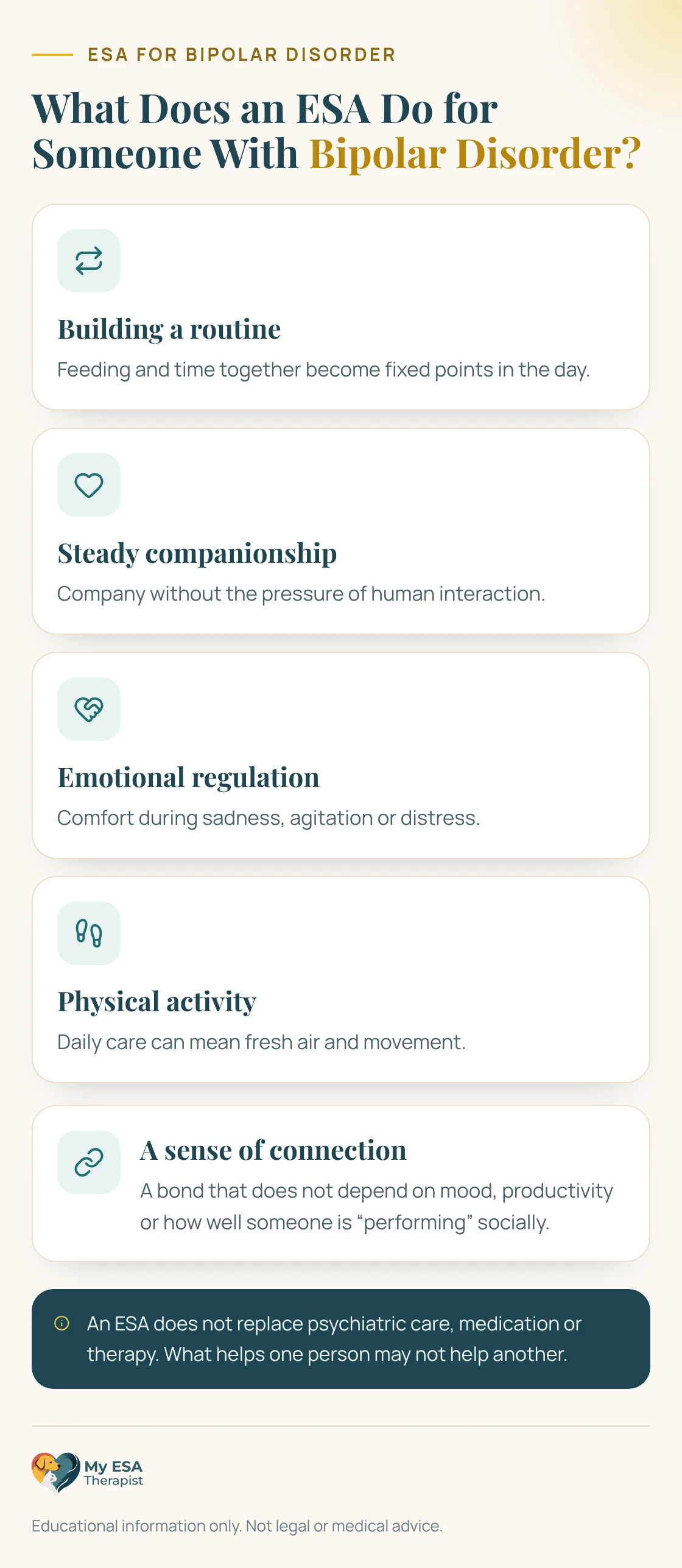
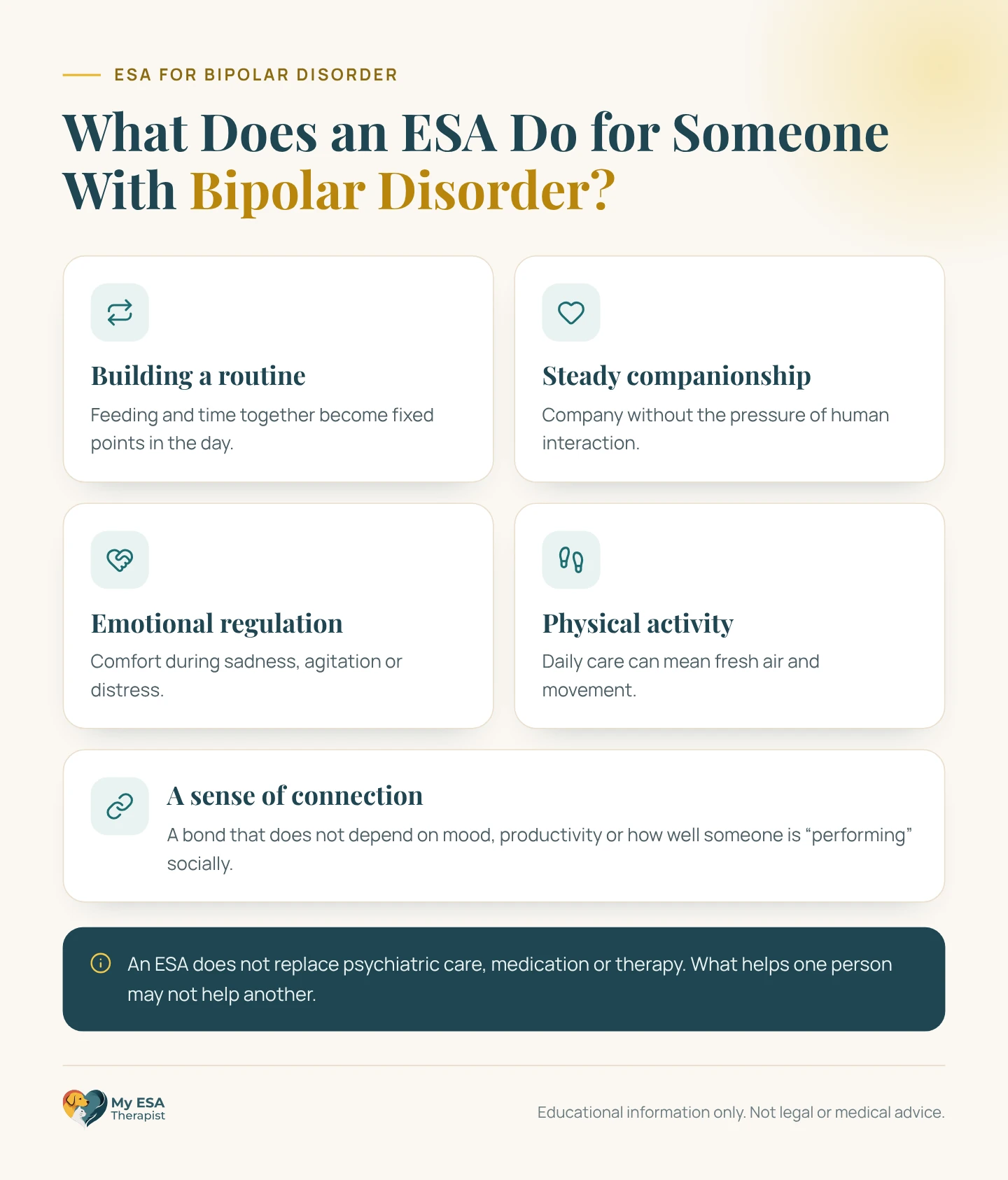
An ESA doesn’t replace psychiatric care, medication, or therapy. Its value comes from something different: The actual day-to-day bond between a person and their animal. And for someone with bipolar disorder, that support can look different depending on what they’re dealing with.
Building in a Routine
Bipolar disorder can throw off sleep, energy, motivation, and the normal rhythm of a day. Taking care of an animal adds some predictability and structure to the day. Feeding the ESA and spending time together become fixed points in the day. When things feel chaotic, that kind of structure can actually make a real difference for stabilizing mood and regulating intense emotions.
For more information about the potential role of animal companionship during depressive symptoms, read our guide to ESAs for depression.
Steady Companionship
Being alone makes emotional distress harder to sit with. An animal offers company without the pressure that can come with human interaction. Just having a familiar animal around can make hard times feel a little more bearable. An ESA can help provide a tether to joy and connection, even through difficult situations such as depressive episodes, manic or hypomanic episodes, trauma, and grief/loss.
Companionship may also be meaningful for people managing trauma-related symptoms. Explore our guide to emotional support animals for PTSD.
Helping with Emotional Regulation
An animal’s presence can bring some comfort during moments of sadness, agitation, or distress. But this isn’t universal. What works for one person might do nothing for another, which is exactly why an ESA evaluation needs to focus on the person’s actual symptoms and needs, not just the diagnosis on their chart. The ESA can provide co-regulation to the person with the mental health disability by remaining calm during distressing moments.
People experience emotional distress in different ways. Read more about how an ESA may provide support for people experiencing anxiety.
Encouraging Physical Activity
Depending on the animal and the person’s situation, daily care can naturally get someone moving and out of isolation. Taking a dog outside, for instance, means fresh air, physical activity, a change of scenery. None of this is a treatment for bipolar disorder, just a possible side benefit of taking care of an animal responsibly. Research shows that getting out in nature can help alleviate depressive symptoms.
A Sense of Connection
Bipolar disorder can strain relationships and make social situations difficult. An animal offers a kind of connection that doesn’t depend on mood, productivity, or how well someone’s “performing” socially. That connection can help during the periods when someone feels isolated from everyone else or when they are struggling to leave the house.
How the ESA Letter Evaluation Process Works for Bipolar Disorder?
It comes down to an individual clinical assessment, not simply a form you fill out. Here’s roughly what that process looks like.
Talking Through Your Mental Health History
A licensed professional will usually ask about your diagnosis, symptoms, treatment so far, and how you’re functioning right now. They may administer evidence-based assessments to measure your depression and mood.
Explaining How Your Symptoms Affect Your Daily Life
Get specific here. Talk about what actually happens when things are hard instead of just saying you “need” an ESA. Reflect on what your symptoms looked like before getting your animal compared to after.
Describing What the Animal Actually Does for You
What changes when your ESA is with you? Does it help you stick to a daily routine? Ease emotional distress and discomfort? Make you feel less alone? The ways your animal supports you will be unique to you and may not be the same as the ways another person with bipolar would be supported by an ESA.
The Clinical Call
The provider decides whether the animal genuinely provides disability-related support and whether recommending an ESA makes clinical sense for you and your treatment plan.
Documentation, if it's Warranted
If the evaluator decides an ESA fits your needs and treatment plan, they’ll provide documentation that meets the requirements for an ESA letter in your state.
There’s no real shortcut where picking “bipolar disorder” from a dropdown on some website gets you an automatic letter. Be wary of any automatic approval sites that promise an ESA letter solely based on checking a box rather than completing an assessment.
ESA Housing Rights for Individuals Suffering from Bipolar Disorder.
The Fair Housing Act gives some protection to qualifying assistance animals when it comes to housing.
Under the FHA, a person with a disability can ask their housing provider for an assistance animal as a reasonable accommodation, even if there’s normally a no-pets policy for the housing unit. That can mean living with the animal despite the restriction or getting pet fees waived.
But an ESA letter isn’t a guaranteed ‘yes’ in every housing situation. Housing providers can still push back on legitimate concerns, like a direct threat or serious property damage that can’t be fixed without significant financial hardship. The rules shift depending on the property itself, federal requirements, and whatever state or local laws apply.
The Bottom Line
Bipolar disorder can potentially qualify someone for an ESA, but the diagnosis alone doesn’t automatically get you there.
What matters most is the actual symptoms and the specific role the animal plays in providing support in managing the mental health condition. An ESA can bring companionship along with routine and comfort, but it works alongside treatment, not instead of it.
If you’re thinking about getting an emotional support animal, then talk to a licensed mental health professional who can look at your situation and figure out if it’s the right fit for you.
Frequently Asked Questions About This ESA Topic
Answers from this article about eligibility, housing, and the evaluation.
01Can someone with bipolar disorder get an emotional support animal?
02Does having bipolar disorder mean you automatically qualify for an ESA?
03Can I just make my current pet my ESA?
04Are ESAs allowed the same access as service dogs?
05Will an ESA treat my bipolar disorder?
Important Information
Medical Disclaimer
This article is provided for general educational purposes only. It is not medical, psychological, or legal advice, and it is not intended to diagnose, treat, cure, or prevent bipolar disorder or any other condition. Reading it does not create a provider-patient relationship.
- An ESA is not a medical treatment. An emotional support animal is not a substitute for therapy, medication, or other professional mental health care. For many people managing bipolar disorder, an ESA may be one supportive part of a broader treatment plan.
- A bipolar diagnosis alone does not guarantee eligibility. A diagnosis or DSM-5-TR criteria alone do not automatically determine ESA eligibility. A licensed mental health professional must assess your individual symptoms, needs, and circumstances, and approval is never guaranteed.
- Benefits are not guaranteed. Descriptions of how an ESA may offer comfort reflect general observations. An animal will not prevent or treat mood episodes, and individual experiences vary.
- An ESA is not a service animal. No task training or special skills are required, and an ESA letter does not grant public access rights. To receive the housing protections that apply to ESAs, you need a recommendation from a licensed mental health professional. Laws can change, so consult a qualified professional or attorney about your situation.
- Do not change your care because of this article. Never stop, delay, or adjust any treatment or medication, including mood stabilizers, without first speaking with your doctor or prescriber. If you notice a change in your mood, sleep, or energy, contact your care team.
Need urgent help? If you are in crisis or thinking about harming yourself, call or text 988 (Suicide & Crisis Lifeline, U.S.). Veterans can dial 988 then press 1. For a medical emergency, call 911.
See our Terms of Use and Privacy Policy.

Allyson Valley
I’m a Licensed Professional Counselor (LPC-MHSP), Ph.D. in Counselor Education & Supervision, with over six years of experience leading and delivering care across crisis services, behavioral health programs, and healthcare systems.
See full bioYour Next Step
ESA documentation is issued only after an evaluation by a licensed professional. These pages explain the process and requirements.



- Evaluation by a clinician licensed in your state
- $99, no hidden fees
- Secure, HIPAA-compliant telehealth